
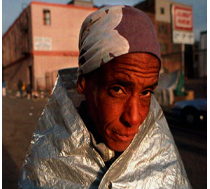
 VIEW FROM HERE - I love having candid conversations about homelessness when I have an opportunity to do so. Last week, I had the best conversation about why homeless systems of care fail African Americans and prepare many for long-term cycles of poverty.
I haven’t been able to pinpoint any good studies that address African American homelessness in Los Angeles County or how to address the problem that will lead to a significant reduction. Most studies just spit out statistics without any depth of factors behind it.
VIEW FROM HERE - I love having candid conversations about homelessness when I have an opportunity to do so. Last week, I had the best conversation about why homeless systems of care fail African Americans and prepare many for long-term cycles of poverty.
I haven’t been able to pinpoint any good studies that address African American homelessness in Los Angeles County or how to address the problem that will lead to a significant reduction. Most studies just spit out statistics without any depth of factors behind it. My assumption is that no one really knows how to decrease African American homelessness or wants to acknowledge after placement into housing poverty persist.
I firmly believe that African American homelessness is not the same as homelessness for non-African Americans. It looks different. The experience and outcomes are different.
Unlike other ethnic groups, African Americans encounter more socio-economic barriers than any other group of people in housing, education, employment, family stability, and food security. Years of marginalization and cumulative disparities have resulted in cyclically poor outcomes.
Frankly, no policy I have seen recognizes that homeless intervention and prevention need a race approach.
Homeless policy and its support system are not designed to address racial inequity and sustain policies that systemically perpetuate the problem by generating more homeless African Americans.
An African American can exit homelessness and enter poverty in a blink of an eye. By the next blink, he or she can be close to homelessness again. I bet that no one gives a thought as to why or will break out a magnify glass for further examination.
Race matters in homelessness.
Employment is a big issue for many African Americans who are out of work and have become homeless. The unemployment rate for Africans in Los Angeles is 19.3 percent according to the United States Bureau of Labor statistics. Although education and skill are factors in the disparity of securing a job, employer profiling is too.
What about those who are no longer homeless after being placed into housing? If anyone looks at the placement, one will see that African Americans for the most part return to racially isolated urban areas where poverty tends to be concentrated. Returning to these social conditions often times lead to homelessness again because of the lack of social and economic capital to spark economic growth, improve access to health care, reduce crime, and support higher quality schools.
The need is enormous and the resources are few to improve the reduction of African American homelessness. There is very little investment in mitigating the causes of historic and external conditions that created the problem in the first place.
The homeless system needs a redesign to chart and monitor the outcomes of African Americans so that homeless programs reflect the cultural competency necessary to solve the problem and produce better outcomes.
(Janet Denise Ganaway-Kelly offers more than a decade of accomplishments in the housing and nonprofit sector. Janet brings valuable insight in the areas of community and economic development. Additionally, she brings knowledge regarding the leadership and management challenges faced by large and small nonprofits that are struggling or growing organizations. She blogs at jdkellyenterprises.org ) -cw
Tags: African American, homelessness, poverty, race
CityWatch
Vol 9 Issue 46
Pub: June 10, 2011